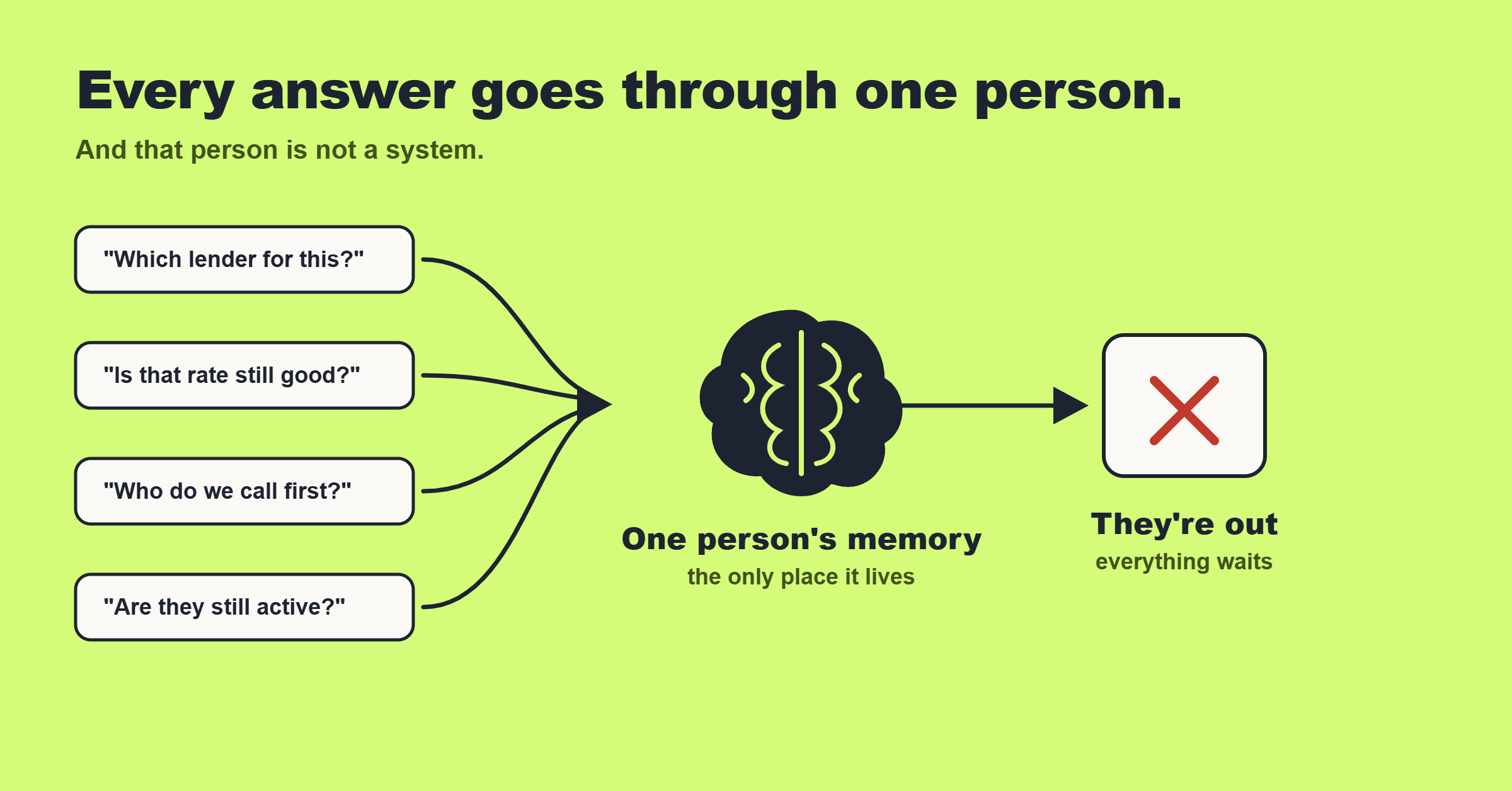
Ask someone raising capital how they know which lender is right for a deal.
Ask a lender how they know which call to return first.
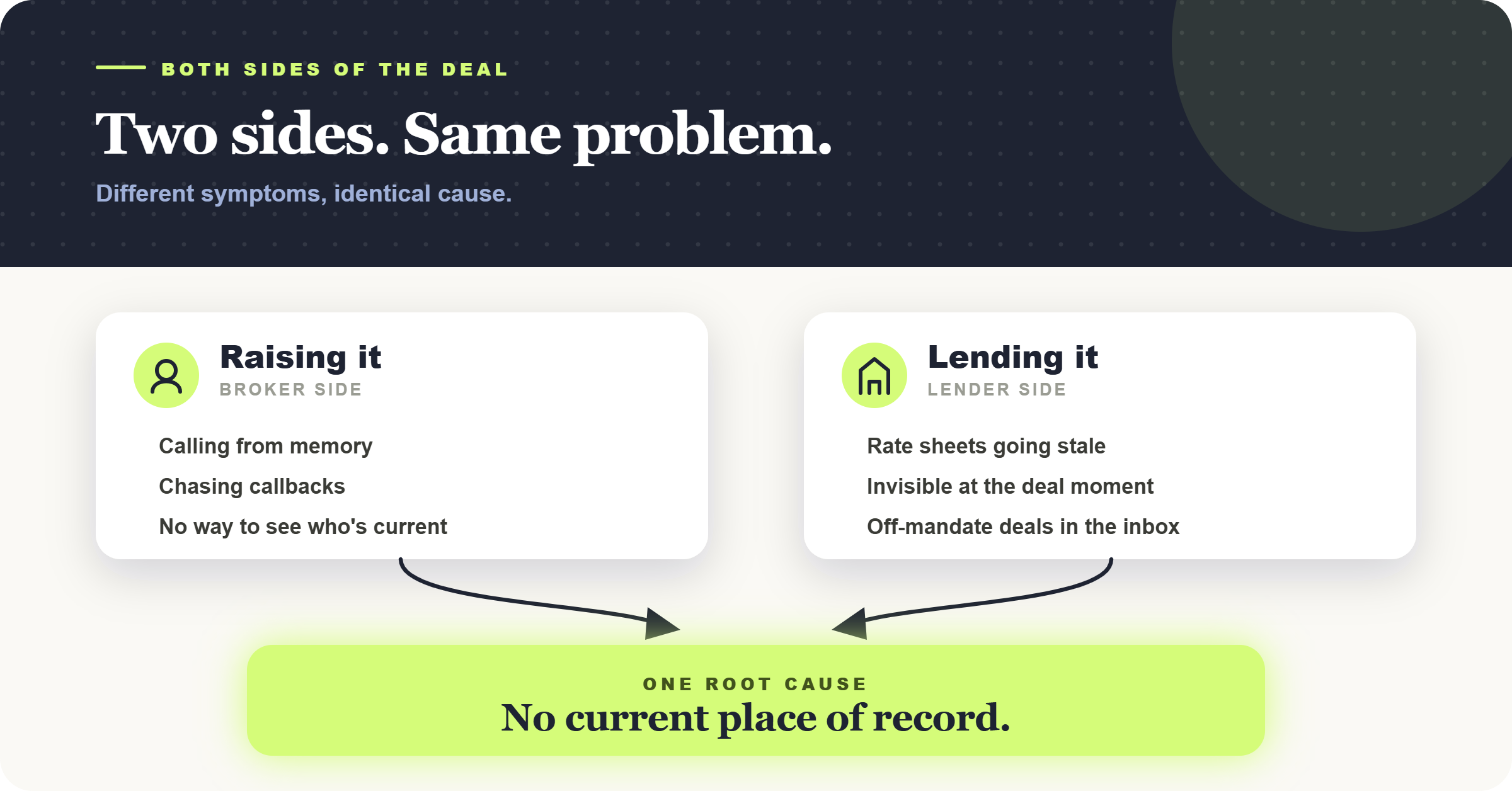
Both answers usually come down to the same thing: a person remembering correctly, under time pressure, in the exact moment it matters.
That’s worth calling what it actually is.
A single point of failure. Treated as normal, simply because it’s always been that way.
Prialto’s research on key person risk describes this exact dynamic across businesses generally: the person who seems most reliable is often the clearest sign of an unaddressed structural risk, not an asset to be relied on indefinitely.
Nobody sets out to build a business this fragile on purpose.
It happens gradually.
A broker starts with a handful of relationships easy enough to track in their head. The network grows. The manual tracking never scales with it. By the time it becomes a real problem, it’s already the only system anyone’s ever known.
That’s how a single point of failure hides in plain sight for years.
It doesn’t feel broken day to day. It just quietly caps what’s possible.
Two decades spent on both sides of this desk, originating over a billion dollars across more than 1,500 transactions, means watching this play out from every angle.
As the broker relying on memory to route a deal. As the lender relying on memory to know which mandate still applies.
Same failure mode. Different seat at the table. More on that background on the About page.
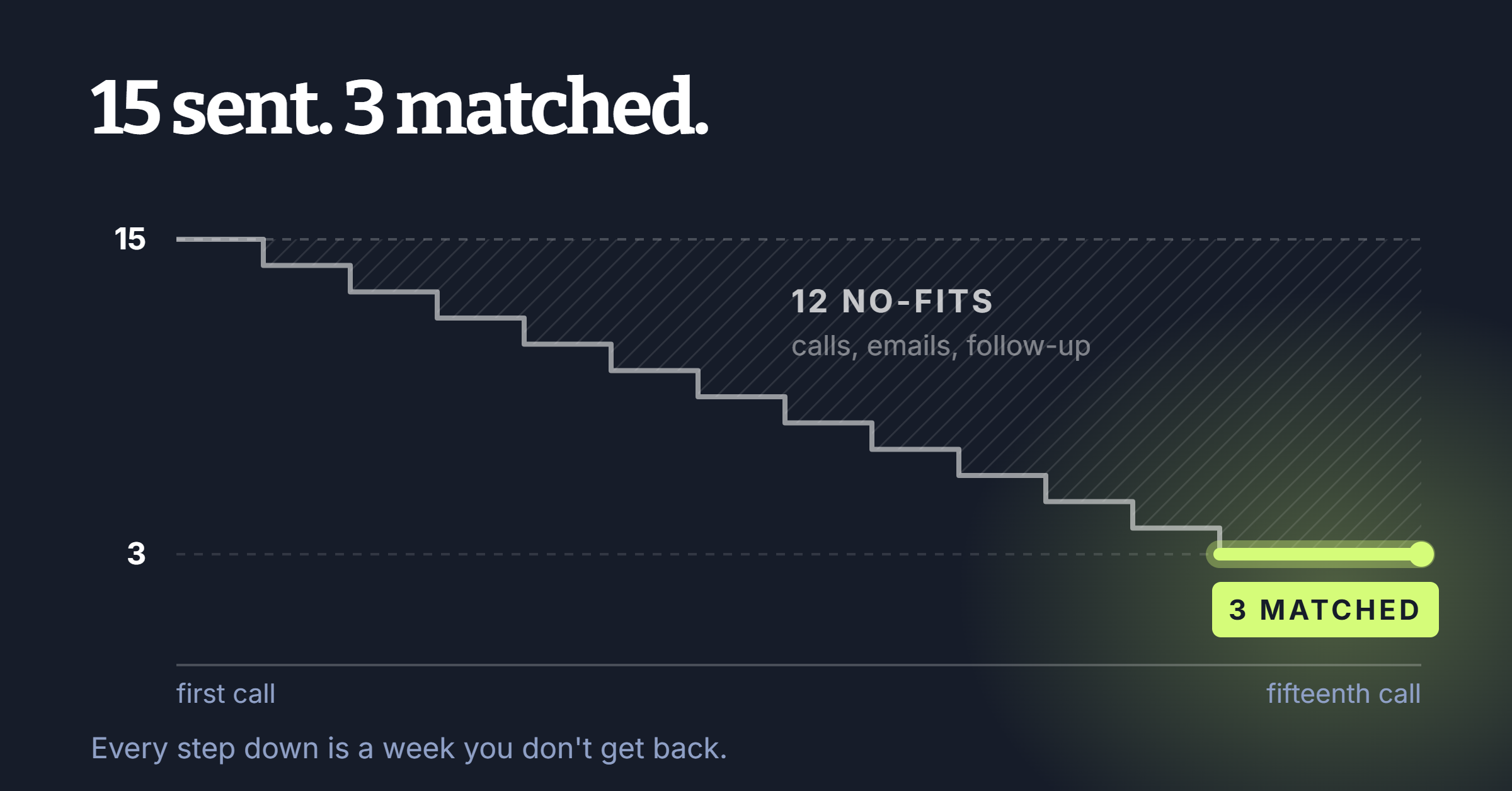
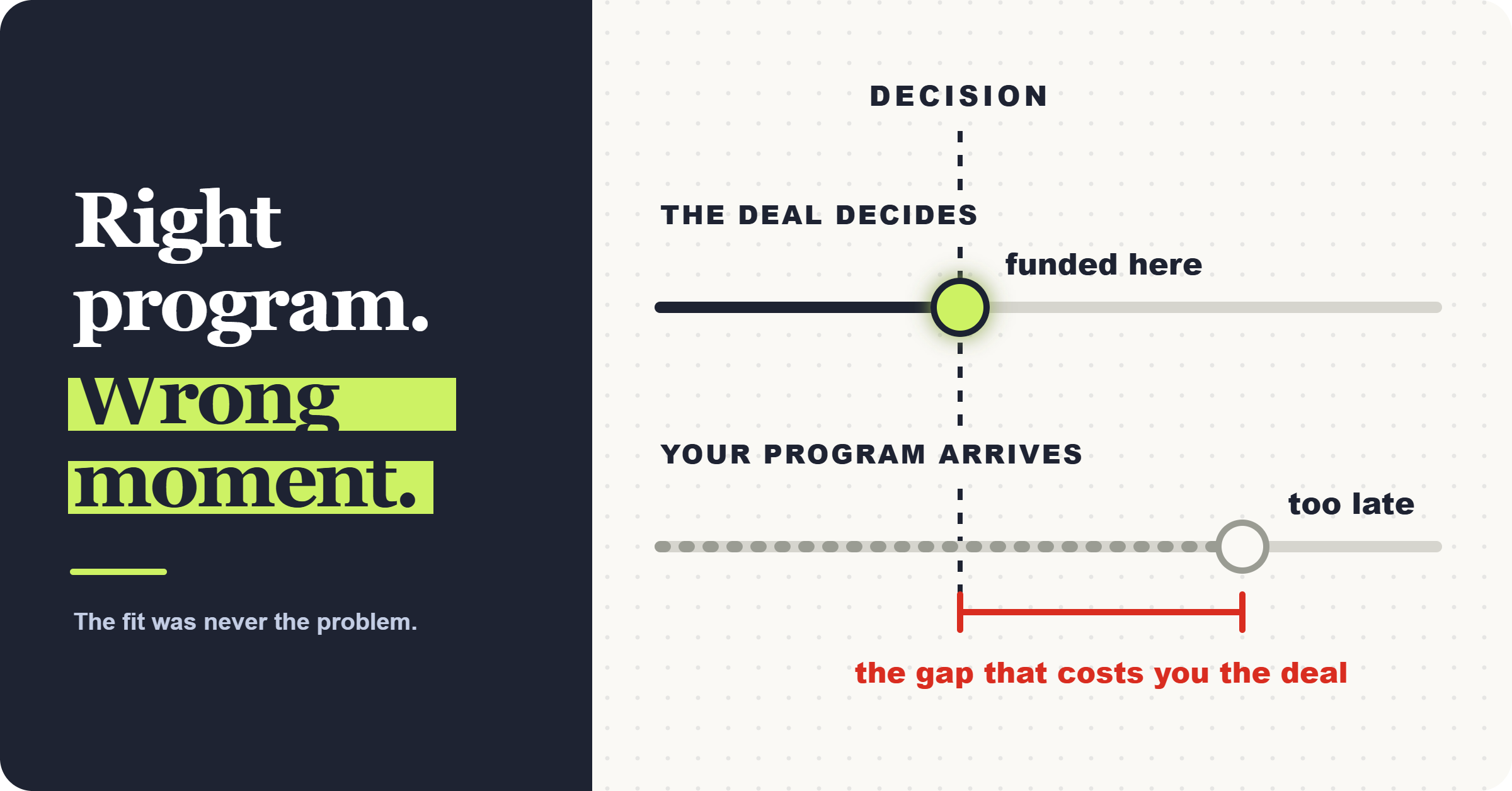
The cost shows up in deals that go to the wrong lender because the right one wasn’t top of mind that day.
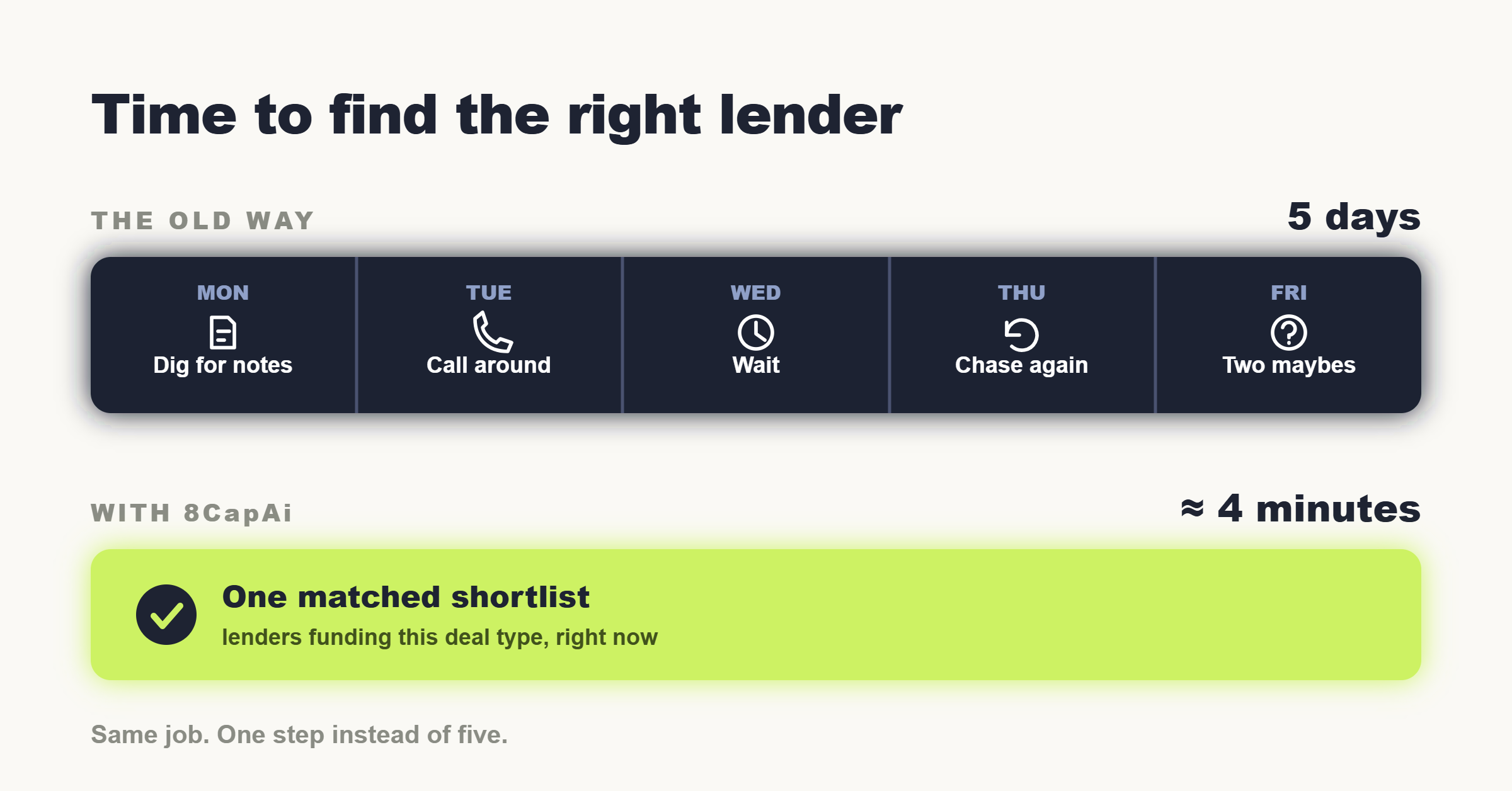
In lost time when the one person who knows the answer is unavailable.
In limited growth, because a business that depends entirely on one person’s memory can only ever be as big as that memory allows.
None of it arrives as a single dramatic failure. It shows up as a ceiling. Quietly capping everything running through it.
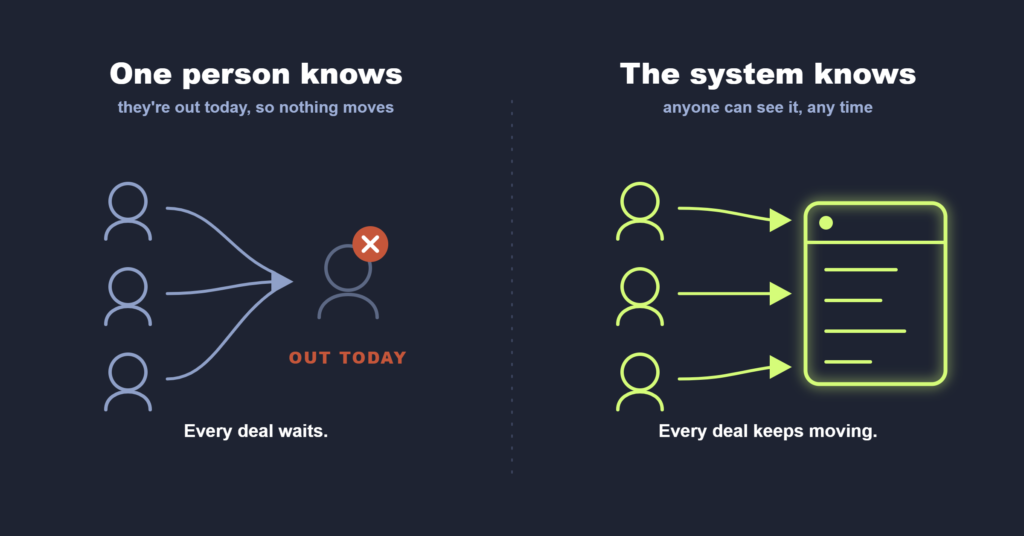
ClearlyAcquired’s analysis of key person risk in M&A notes that businesses with visible key person dependency routinely see buyers discount valuation to account for exactly this kind of fragility.
The fix isn’t finding a more reliable person and or asking someone to try harder to remember.
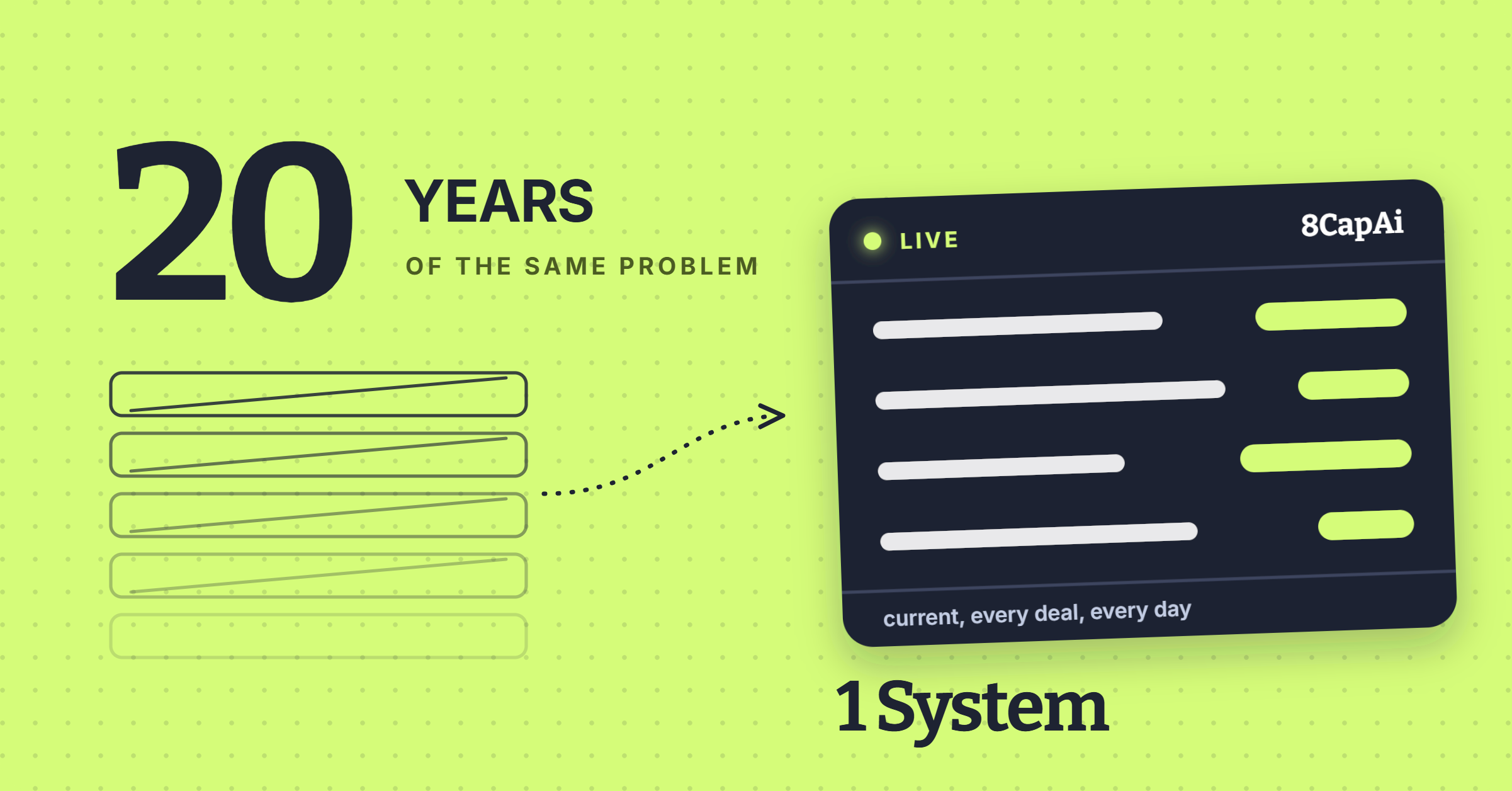
It’s building a place where lender programs and deal relationships live and stay current, so no single memory has to carry all of that weight alone.
A person remembering correctly under pressure isn’t infrastructure. It’s a habit that’s worked well enough to avoid replacing.
Until the day it doesn’t.
Talk through where this shows up in your own process. Book a call directly.