Alan manages lending at a private fund. Quarterly rate sheets. Regular calls. A presence at every relevant conference. Real effort. Consistent.
And still, deals that would have fit his program perfectly were going to competitors every week. Not because his rates were off. Not because his criteria were unclear.
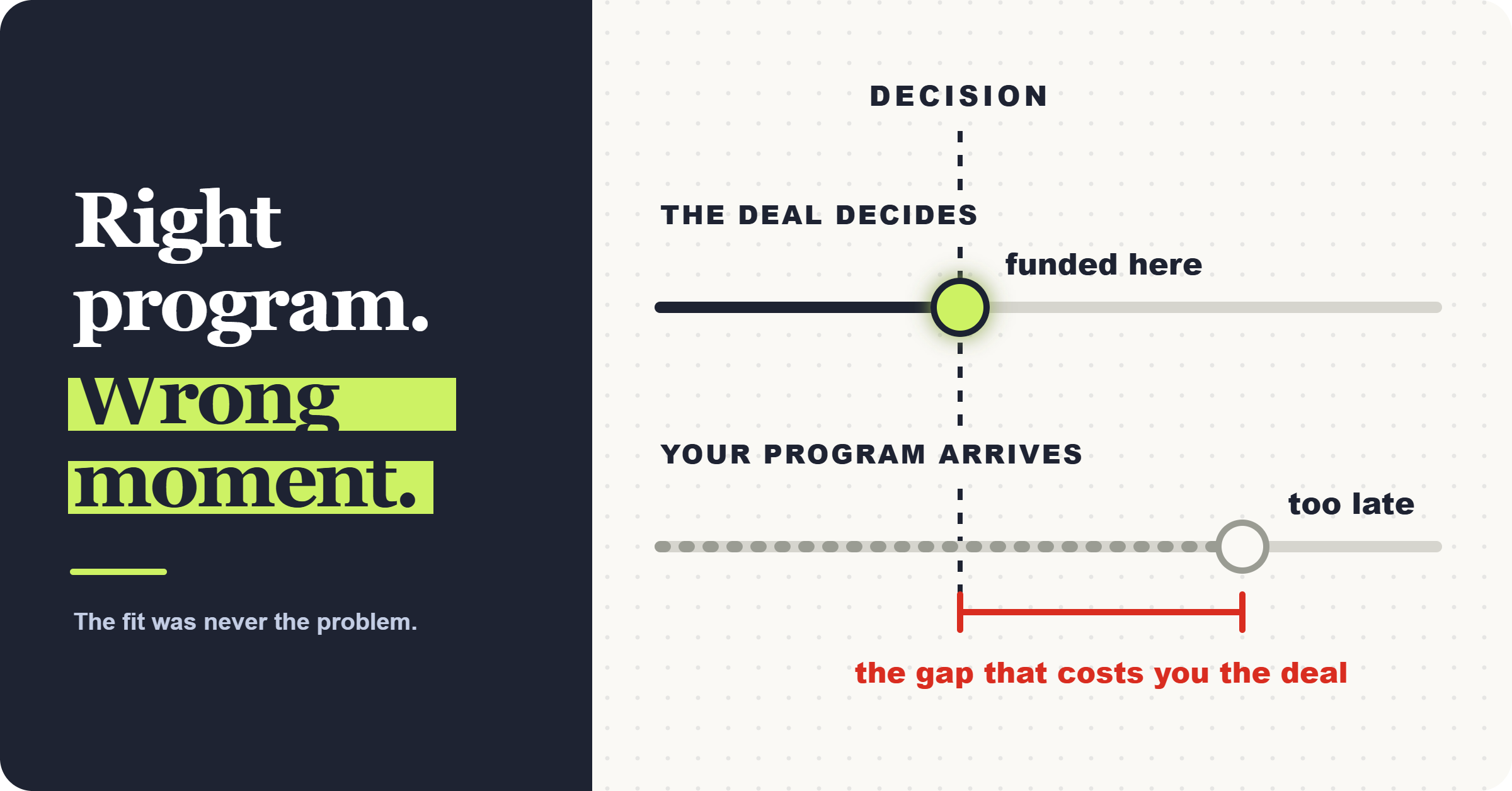
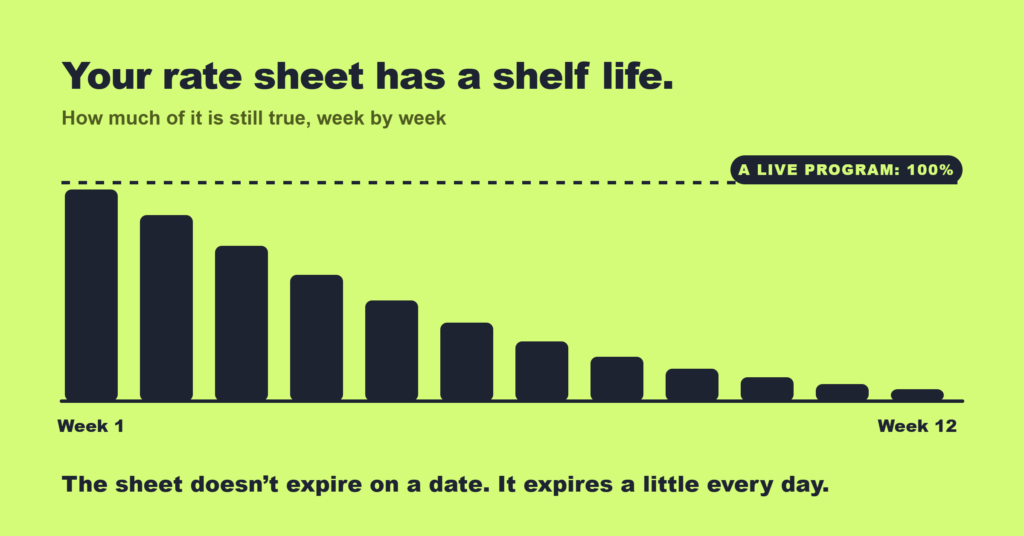
Because when the deal landed on a broker’s desk, Alan wasn’t the name that came up first. This is a timing problem. Not a program problem. A rate sheet is a snapshot of what a program looked like on the day it went out.
The moment leverage shifts, a new geography opens, or an asset class gets added to the mandate, that rate sheet sitting in someone’s inbox is already out of date. A deal doesn’t wait for the next one to go out. It shows up whenever it shows up.
And it needs to know what a lender is doing right now. Not what was true last quarter.
Invesco’s read of Federal Reserve lending survey data confirms lenders have only recently begun easing CRE underwriting standards for the first time since 2022, meaning criteria are moving in real time in ways brokers can’t see.
The gap between what got published and what’s actually true today is exactly where deals slip away.
It’s rarely because a broker forgot about a lender entirely. It’s because the version of the program they remember is already stale. And there was no way for them to know that in the moment it mattered. What makes this especially frustrating is how quietly it compounds.
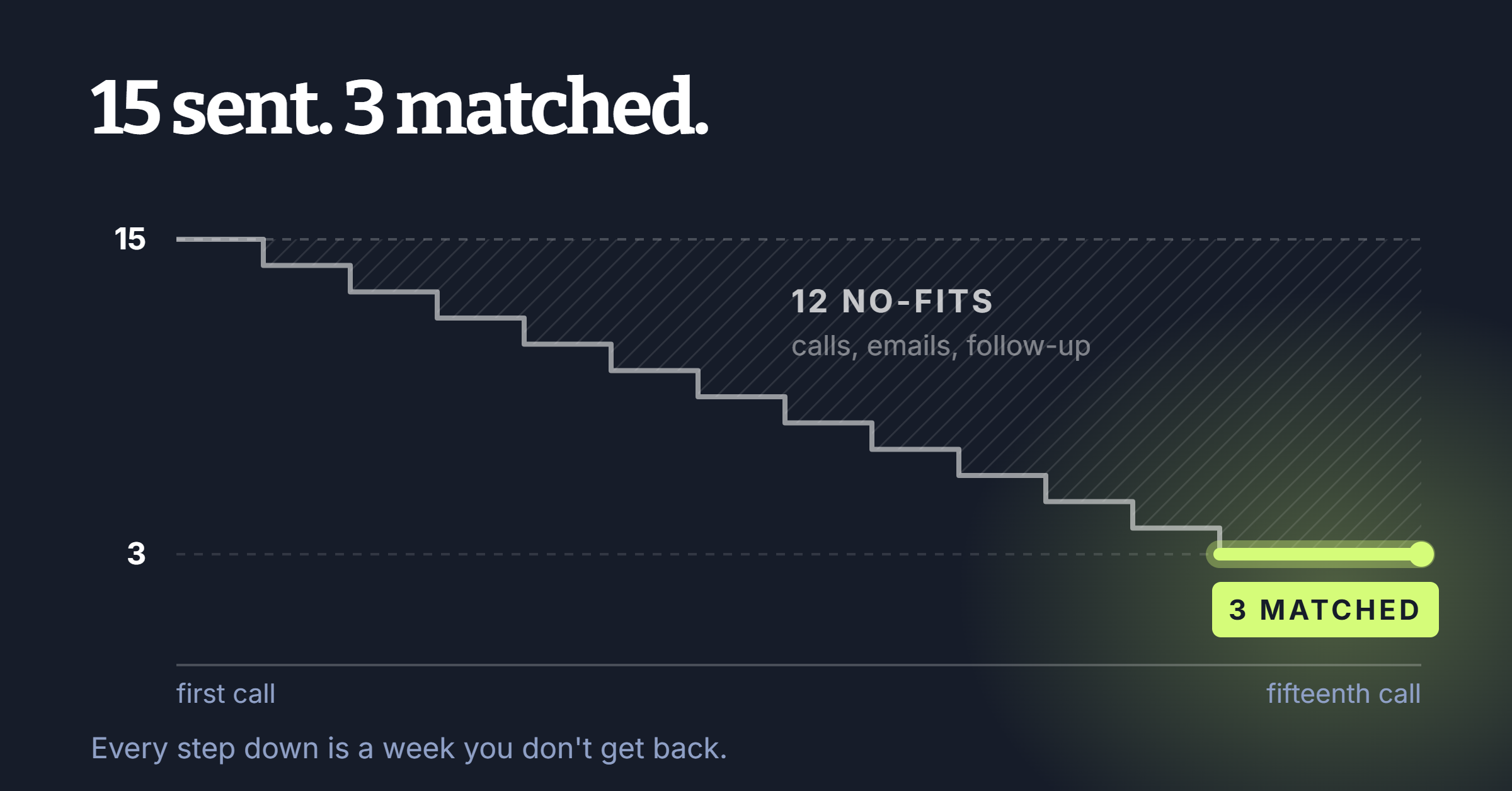
Unlike a missed deadline or a bad quarter, this cost never arrives as one dramatic loss. Small and constant. Week after week. Deal flow routing away from programs that would have actually fit.
The volume at stake is only growing. Reed Smith’s analysis of the 2026 CRE debt maturity wall puts nearly $875 billion in commercial and multifamily mortgage debt coming due this year alone, all of it needing a current lender match at exactly the moment it happens.
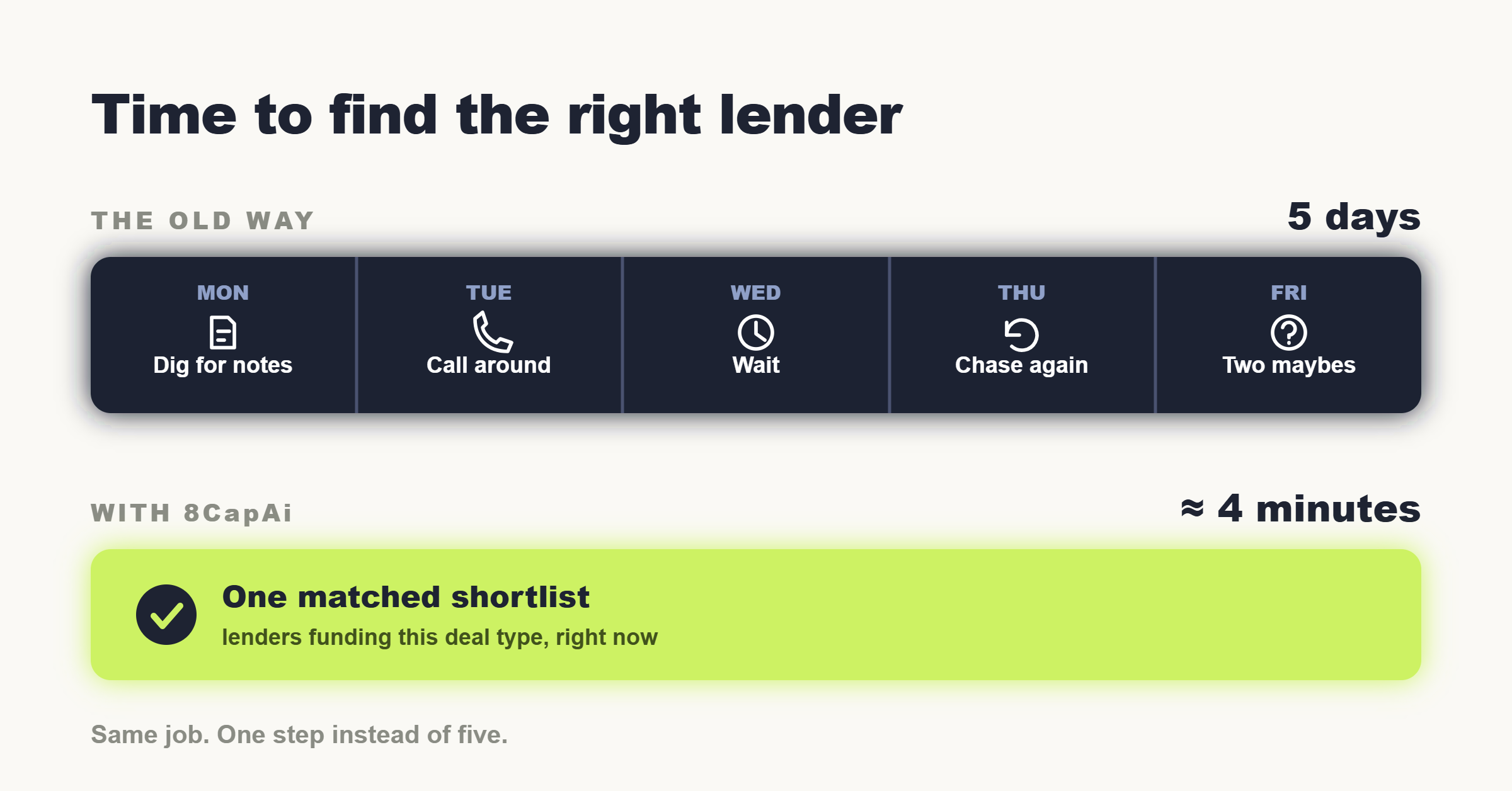
The fix isn’t sending rate sheets out more often. Even weekly updates go stale within days in a market moving this fast.
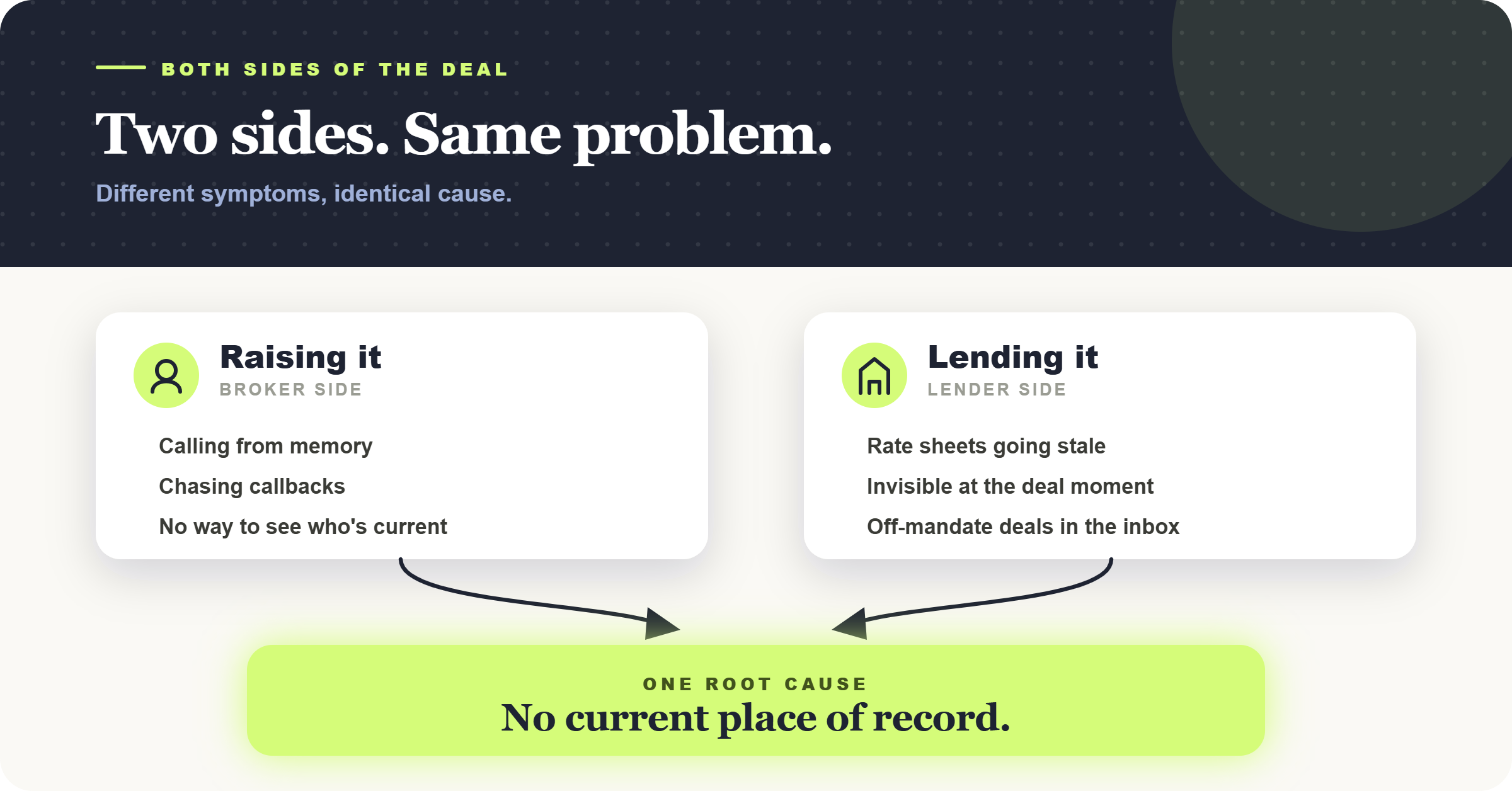
What actually fixes it is a live place of record, one where current programs are visible the moment a deal is being matched, not the moment an email blast last went out. The Lender solution page covers exactly how that works for a lending team.
The program usually isn’t the problem. The timing is.
And that’s a solvable problem the moment current programs have somewhere real to live.
See how live matching works with a demo.