When 8CapAi comes up for the first time, one of three guesses usually follows. All three miss what the actual problem is.
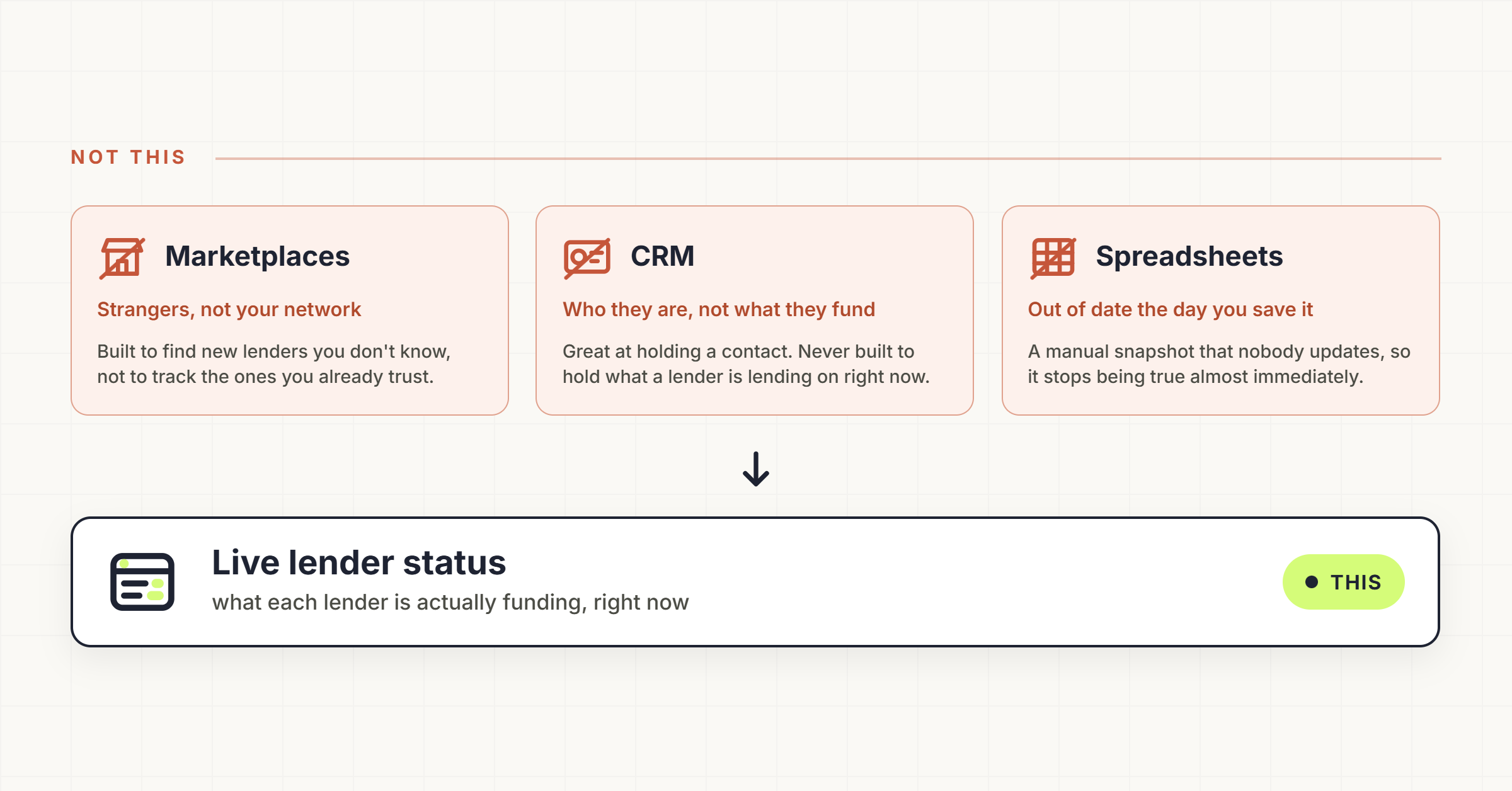
Guess 1: It’s a marketplace for lenders.
It isn’t. And the distinction matters.
Marketplaces solve a specific problem: finding lenders you don’t already know. That’s rarely the real issue for a broker or investor with any real experience. Most already know dozens of lenders through conferences, closed deals, and years of relationship building.
The gap isn’t discovery.
Guess 2: It’s a CRM with a different name.
It isn’t that either.
A CRM remembers who someone is. Name, title, contact info, last call. It was never built to hold what a lender is actually lending on right now. Programs shift. Leverage tightens. Geography changes. None of that lives on a contact card no matter how well it’s maintained.
A CRM answers: who is this person?
It can’t answer: what are they doing this week?
Dealpath’s analysis of CRM limitations in commercial real estate reaches the same conclusion: once real estate teams move past contact management into live execution, a general-purpose CRM runs out of road. Lender sourcing and deal distribution knowing what a lender is doing right now is the piece none of them were built to cover.
Guess 3: A spreadsheet could just do this.
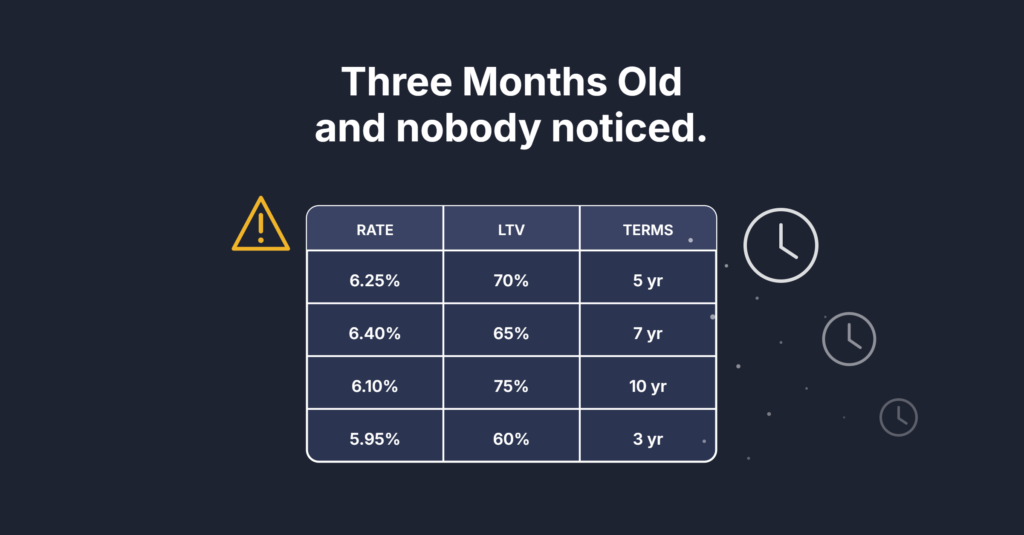
It can. Until it’s three months old and nobody remembers to update it.
Spreadsheets fail quietly. Nobody declares them officially broken. They just slowly stop reflecting reality one skipped update at a time until the information is closer to fiction than fact.
Here’s the actual problem.
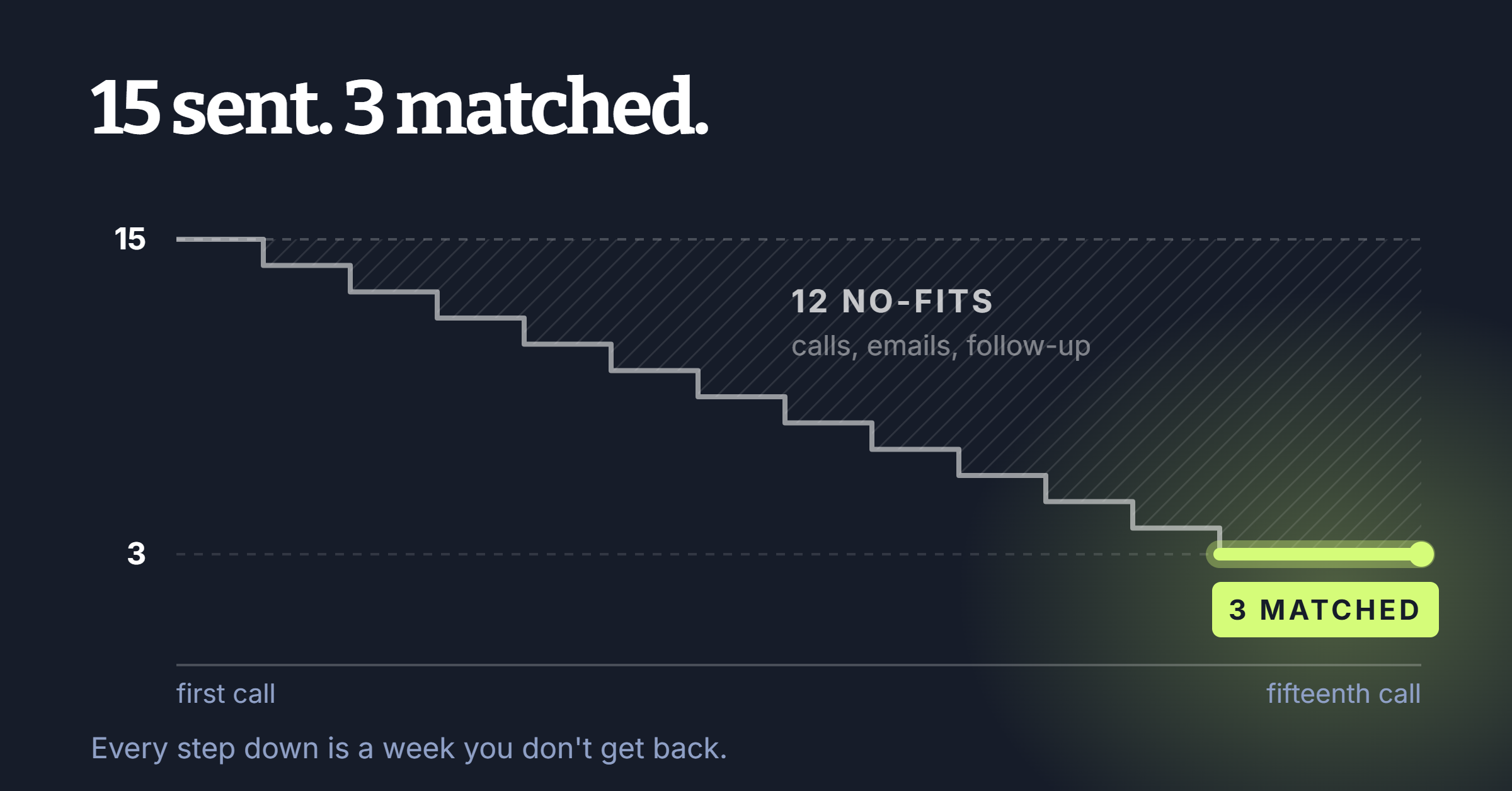
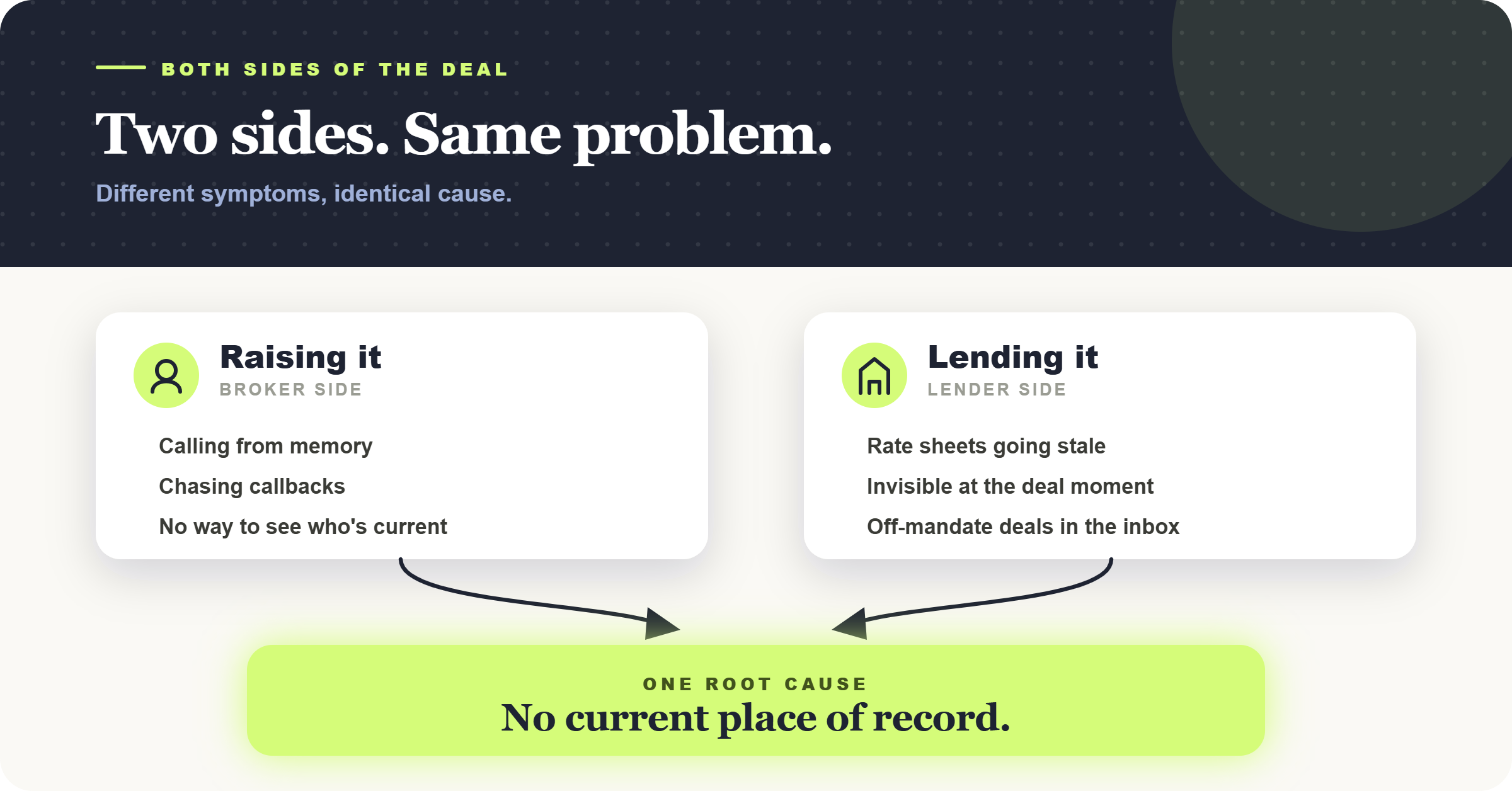
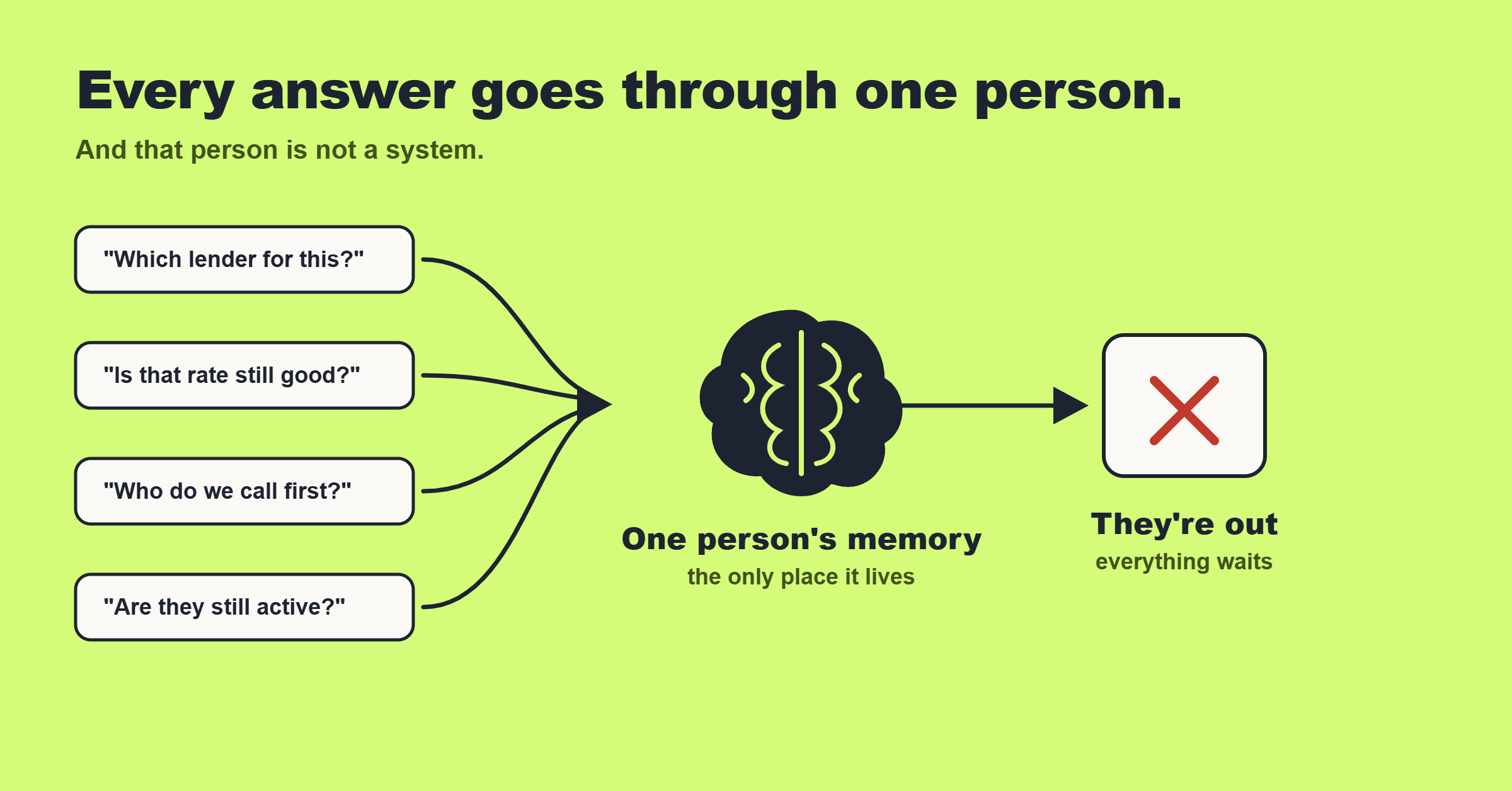
It was never about finding a new lender. It’s that there’s no real place to track the ones already known what they’re actually lending on right now, and what’s changed since the last deal closed together. A structural gap. Not a discovery gap.
Which is why marketplaces, CRMs, and spreadsheets all fall short in the same way. None of them were built to answer the one question that matters most: is the information in front of me still true today?
Getting this wrong leads to buying the wrong fix.
A broker who assumes the problem is “not enough lenders” buys a marketplace subscription and stays stuck. More names don’t solve a currency problem.
A broker who assumes a better CRM will fix it upgrades their contact management and still ends up guessing whether a relationship is current.
A real solution isn’t a directory of strangers. It isn’t a contact list. It isn’t a file someone forgets to update.
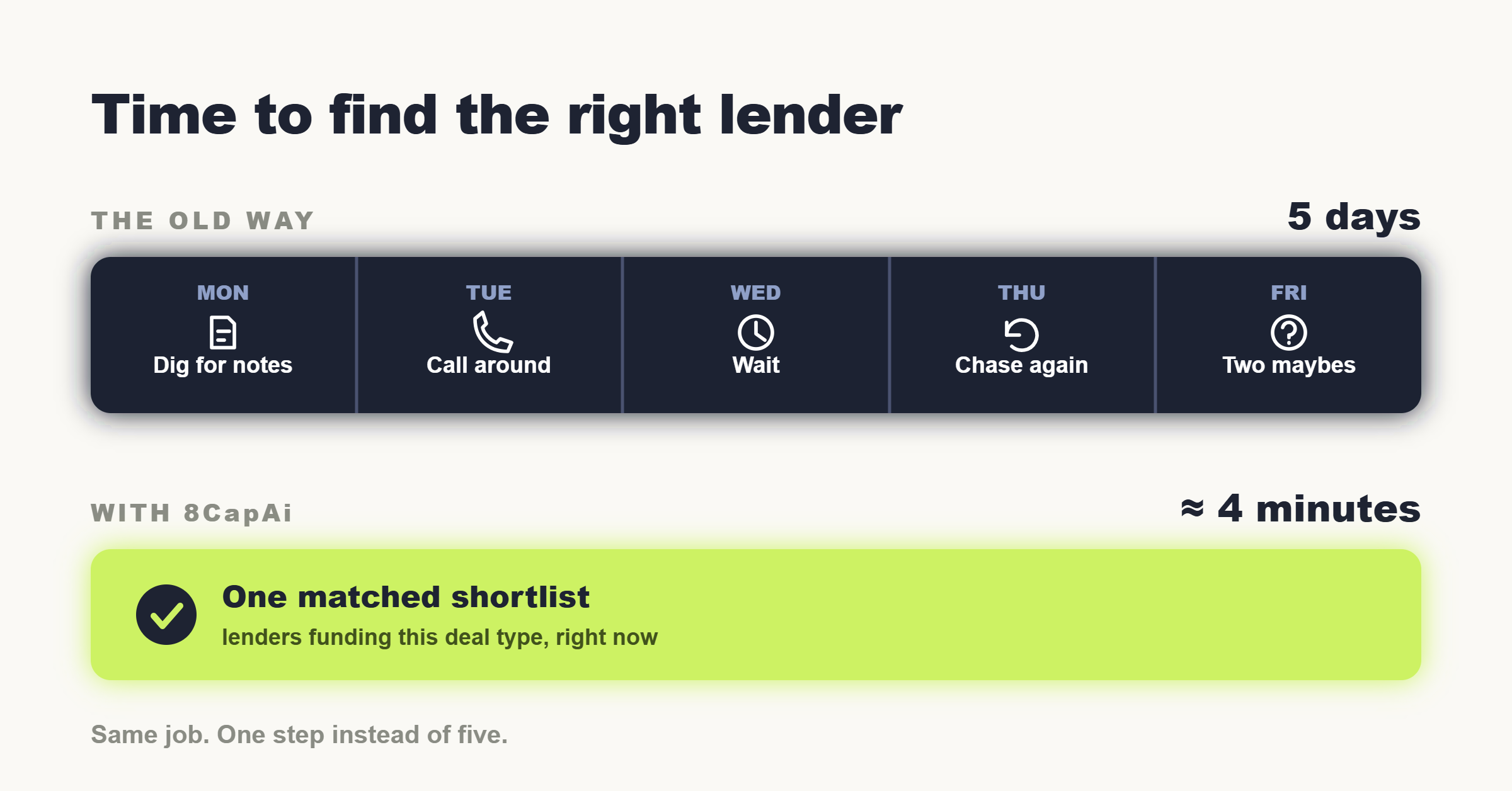
It’s a living place of record where the relationships already built and the ones still being built stay current automatically. The Lender Network page shows exactly what that structure looks like in practice. Not a marketplace. Not a CRM. Not a spreadsheet.
The problem was never finding lenders. It’s keeping track of the ones already there. Compare it directly against your current setup with the free Starter plan.