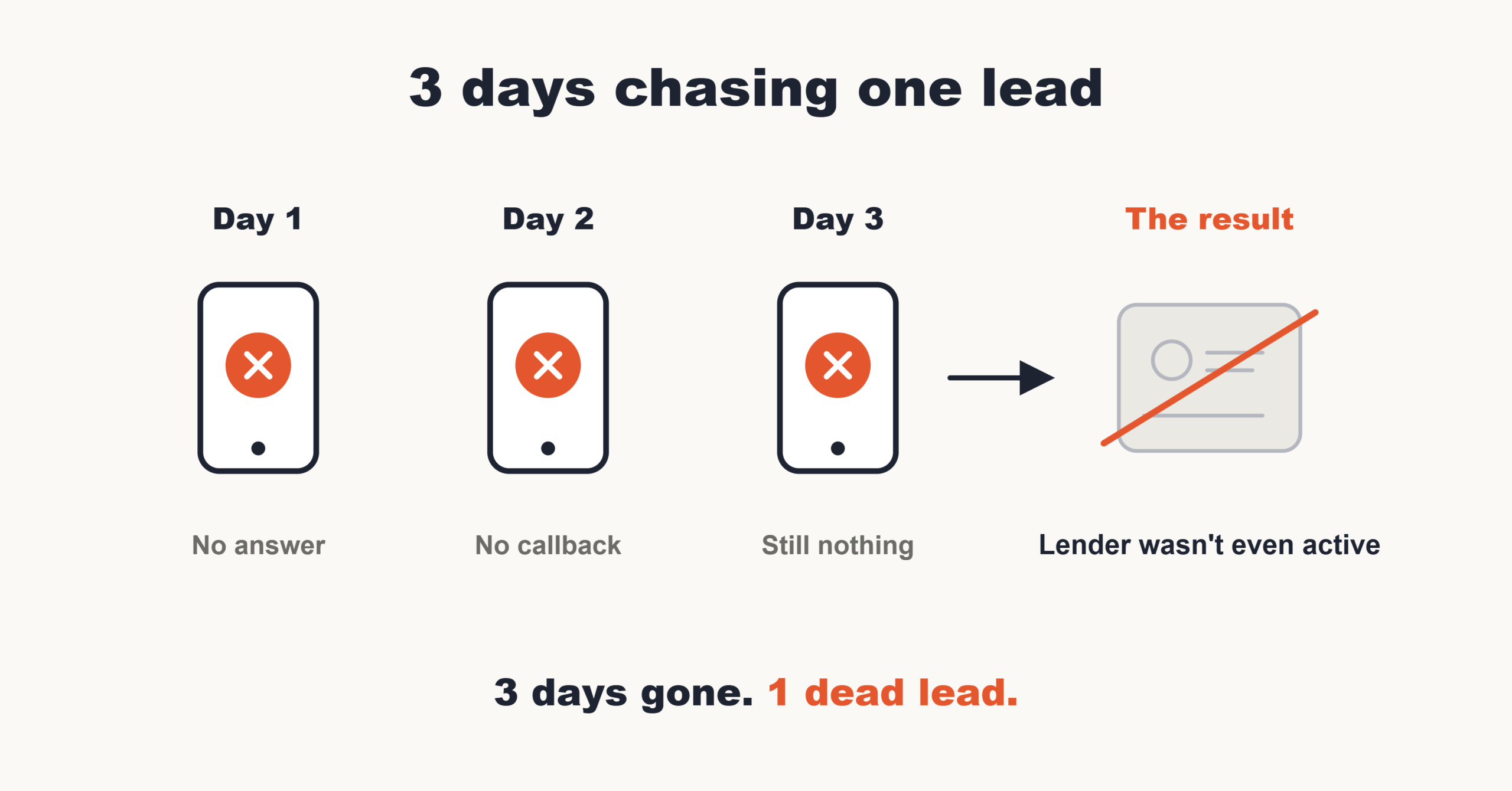
Kevin had a deal under contract. Good property. Real numbers. Legitimate opportunity. He spent three days chasing a callback from a lender who, it turned out, stopped doing this asset class eight months ago.
Three days. Not because Kevin was careless. Because there was no way to know before dialing whether that lender was still active in this space. Anyone raising debt for a deal knows this pattern.
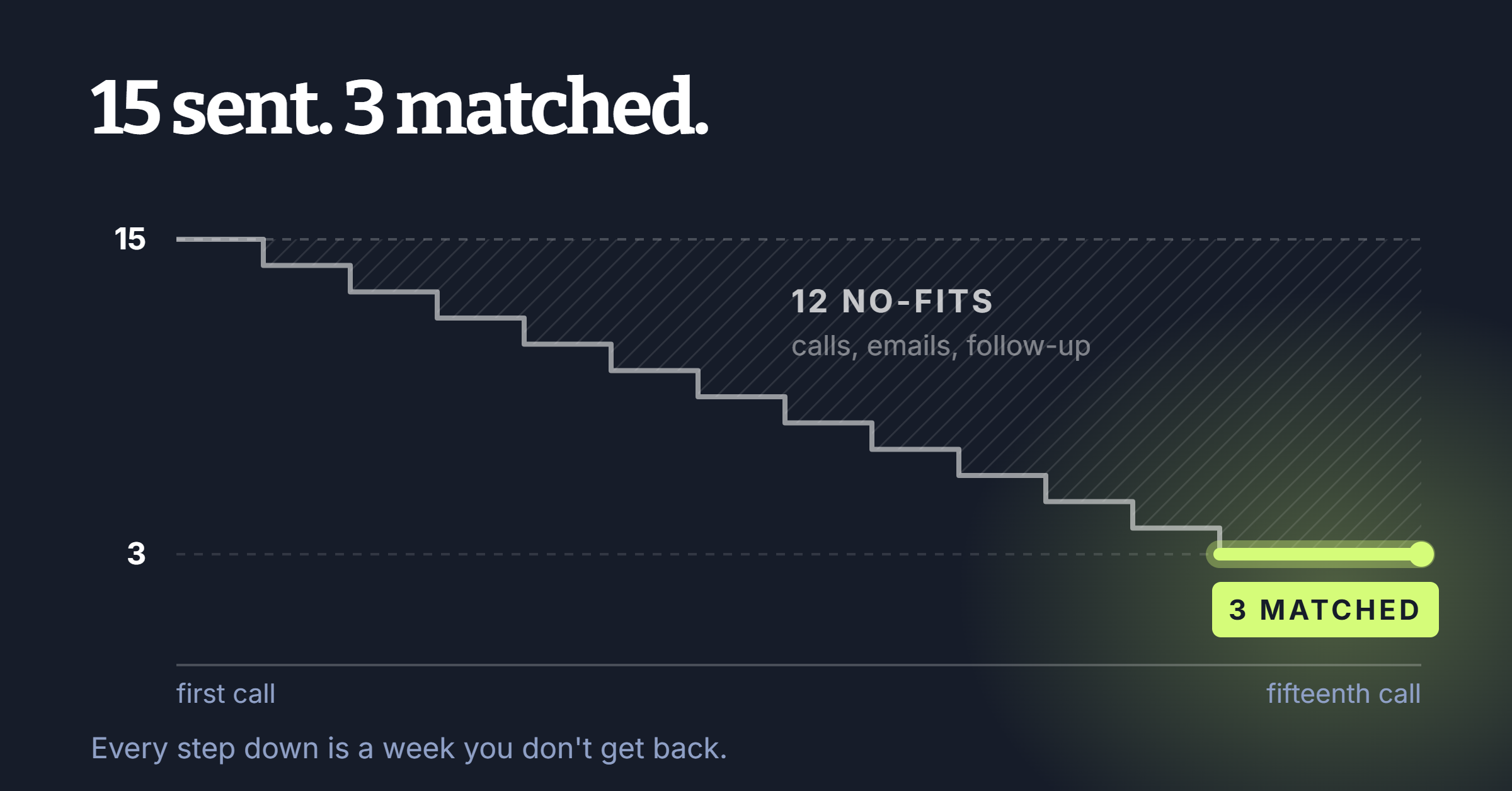
Half the week disappears into something that has nothing to do with being good at the job. Chasing a callback from a lender who might not even be active anymore. Chasing an intro because the last one fell through. Chasing information that used to live in someone’s head.
That’s not a work ethic problem.
Nobody spending their week chasing callbacks is being lazy. Usually the opposite. The issue is that nothing in the process tells you before you pick up the phone whether the person on the other end is still doing this kind of deal. Buildout’s research on CRE brokerage automation found brokers spending 46% of their time on exactly this kind of administrative chasing.
There’s a common instinct when chasing gets exhausting. Go find more lenders. Treat a bigger network as the fix. It almost never works that way.
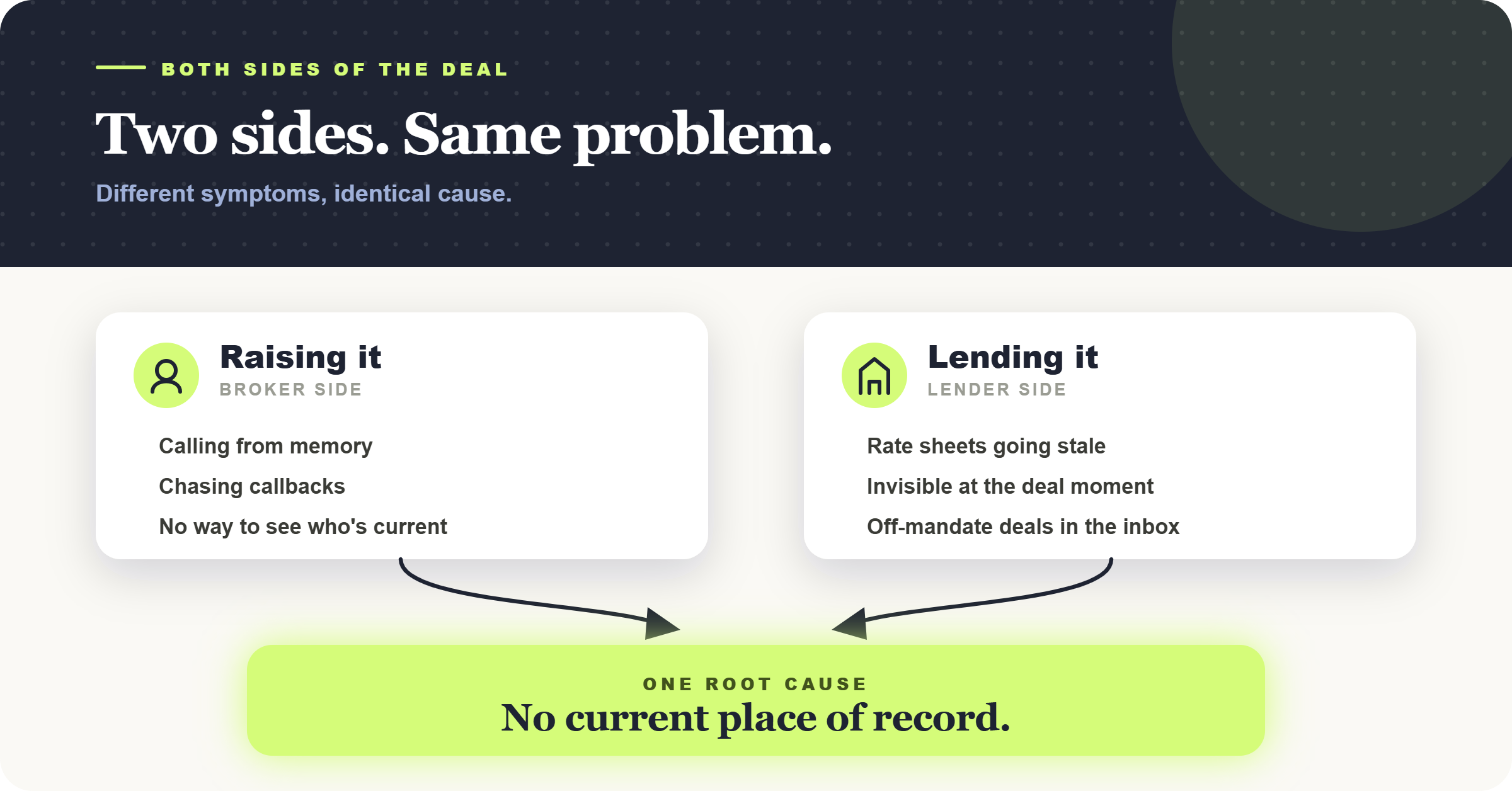
Most experienced brokers already know plenty of lenders. The actual problem isn’t a lack of contacts. It’s that there’s no real place to track the ones already known what they’re lending on right now, and what’s changed since the last deal closed together.
A marketplace solves a different question entirely: how to find lenders you don’t already know. That’s rarely where the time is actually going.
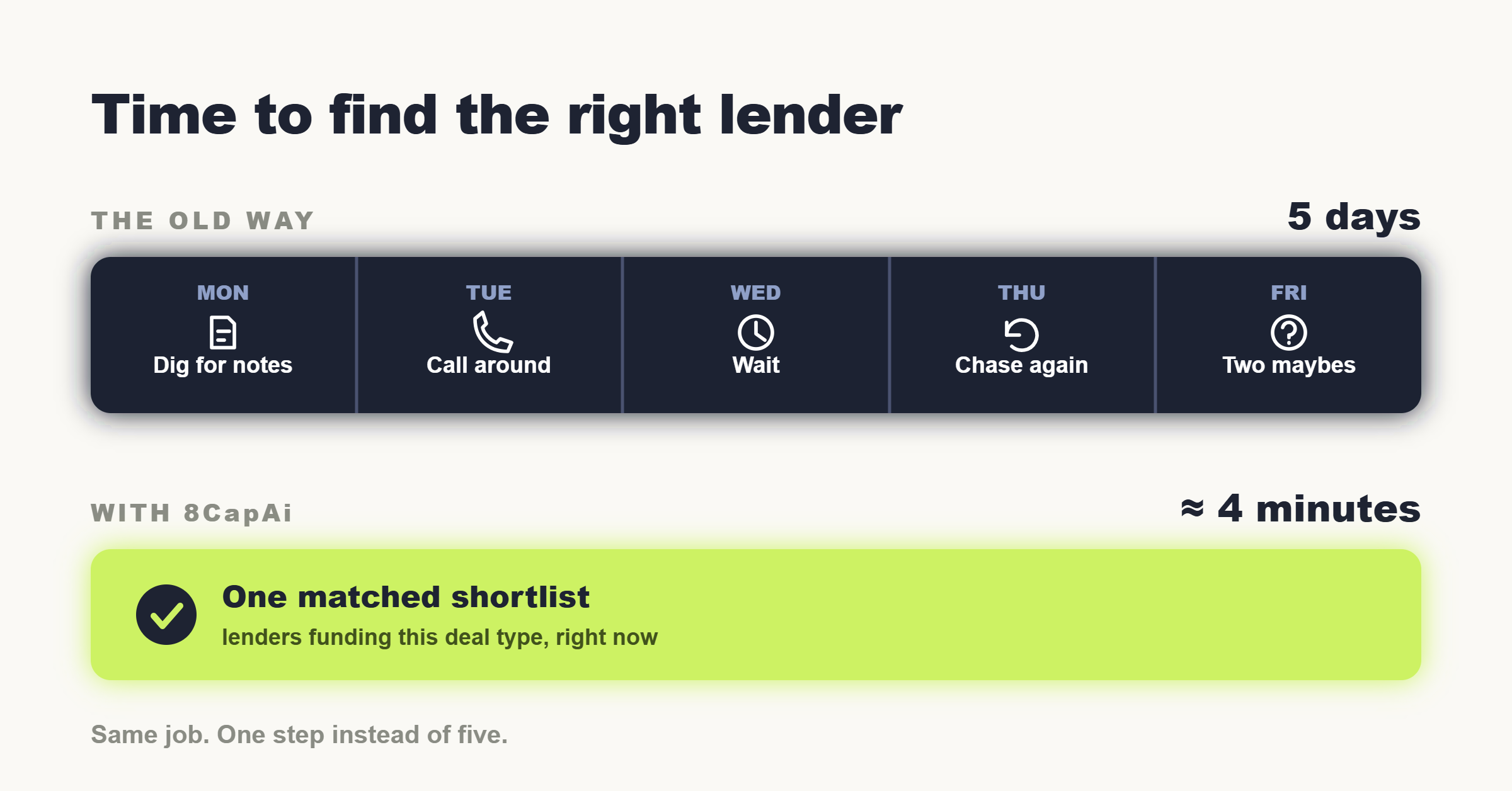
Staying current the old-fashioned way means calling around. Checking in. Asking a colleague who talked to whom last. Slow. Inconsistent. Entirely dependent on whoever happens to remember to do it that week.
Multiply that across every lender relationship a broker has and the math stops working. Which is the entire reason chasing exists in the first place. The pressure on that structure has only grown Reed Smith’s analysis of the CRE debt maturity wall puts nearly $875 billion in commercial and multifamily mortgage debt coming due in 2026 alone.
It isn’t diligence that’s missing. It’s structure.

What actually closes the gap is a current, structured place of record for every lender relationship. One that shows what’s active right now instead of what was true last quarter.
So instead of chasing a callback just to find out whether a lender is still active, you can see it before you dial. Hard work gets deals seen. Chasing doesn’t get deals closed any faster. It just makes the same amount of work feel a lot heavier.
The difference isn’t effort. It’s having a current place to look before you ever pick up the phone. The Broker solution page walks through exactly how that looks day to day.
Walk through how the matching works with a live demo.